


Missing a tooth can affect more than your smile. It can change how you eat, speak, and feel around people.
At Mona Vale Dental, implant treatment is carefully planned using digital scans, 3D imaging and a personalised approach. Dr Alistair Graham is highly skilled, has extensive implant experience, and can complete both implant placement and the final crown in-house, giving our patients peace of mind that their care is handled by one trusted dental team from start to finish. This can make the treatment process feel simpler, more comfortable and less stressful.
What Are Dental Implants?
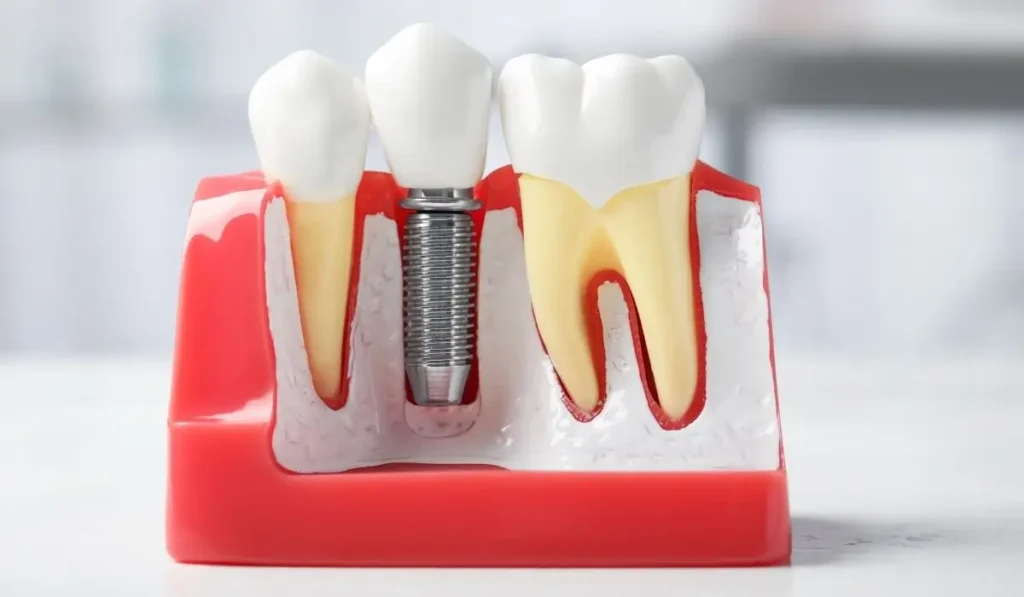
A dental implant is a small titanium post placed into the jawbone. It acts like an artificial tooth root.
Once the bone has healed around the implant, a replacement tooth is attached. This final tooth is designed to look and function like a natural tooth as closely as possible.
Dental implants may be used to replace one missing tooth, several teeth, or to help support dentures. They do not usually rely on nearby teeth for support, which is one reason they can be a strong long-term option for suitable patients.
Why Replacing a Missing Tooth Matters
It can be tempting to leave a gap, especially if the missing tooth is near the back of the mouth. But over time, that gap can create other problems.
Nearby teeth may tilt or drift into the space. The tooth above or below the gap may move because it no longer has anything to bite against. Over time, this can affect your bite, create food traps and make future treatment more complex.
Who Is a Good Candidate for Dental Implants?
You may be a good candidate for a dental implant if you are missing one or more teeth or are about to lose a tooth.
Suitability depends on your gums, jawbone, bite, medical history and general health. Some patients may need gum treatment or bone grafting before an implant can be placed.
Implants are not always suitable immediately for patients with uncontrolled diabetes, aggressive gum disease, certain bone-related medications, heavy smoking risks, or younger patients whose jaw growth has not finished. In these cases, alternatives such as bridges or removable dentures may be discussed.
What Does the Dental Implant Procedure Involve?
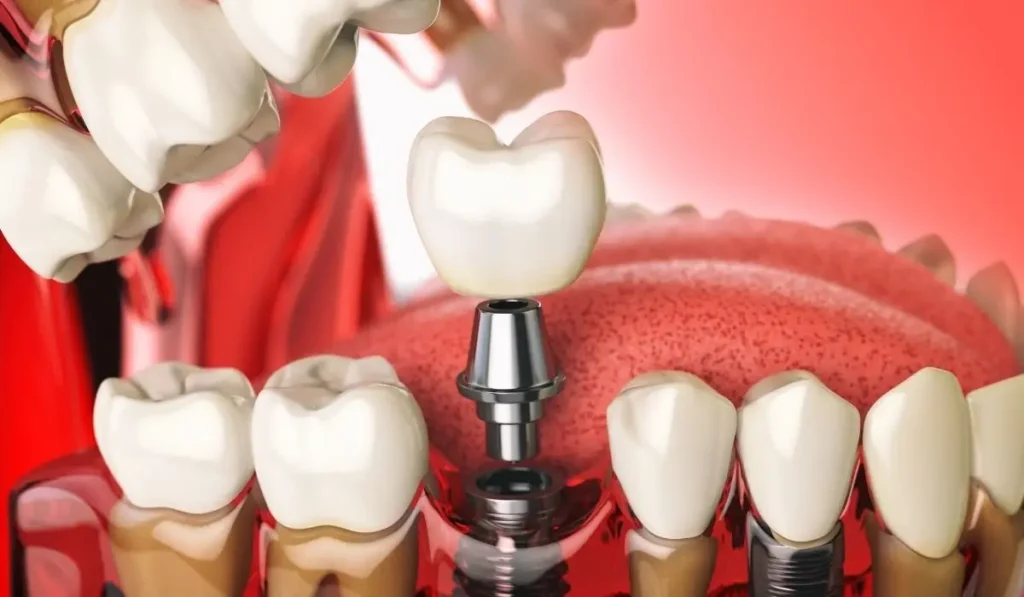
Dental implant treatment is usually completed in stages over several months.
Consultation and Planning
Your dentist assesses the site of the missing tooth, surrounding teeth, gums, bite and overall oral health. At Mona Vale Dental, this may include a 3D CBCT scan and an intraoral digital scan.
These records help design the final tooth first, then position the implant to support that result. The goal is not just to place the implant correctly, but also to restore a tooth that works naturally with your bite and smile.
Guided Implant Placement
The implant is placed under local anaesthetic. For more complex cases or nervous patients, IV sedation may be available.
Mona Vale Dental uses digital planning and guided implant surgery where appropriate. A 3D printed guide helps position the implant accurately and may support a more comfortable and predictable procedure.
Healing
After placement, the implant needs time to fuse with the jawbone. This process is called osseointegration. In simple terms, the bone grows onto the surface of the titanium implant, creating a stable foundation.
Healing often takes around three months before the final crown stage begins.
Final Crown
Once the implant is stable, a new scan is taken, and the crown is made. The crown is the visible tooth that is shaped and coloured to suit your smile.
At Mona Vale Dental, Dr Graham can place the implant and restore the final crown in-house. This means one team can manage the full treatment journey.
How to Look After a Dental Implant
Good home care and professional maintenance are essential.
Brush and floss daily, attend regular hygiene visits, and follow the care advice given by your dental team. Professional cleaning, including guided biofilm therapy where suitable, can help reduce plaque and bacteria around the implant.
Long-term implant health depends on good hygiene, careful planning, and a crown design that allows the area to be cleaned properly.
Health Insurance and Payment Plans
Dental implant costs vary depending on the number of teeth being replaced, whether bone grafting is needed, and whether IV sedation is used.
At Mona Vale Dental, treatment costs are discussed clearly before treatment begins. Health fund rebates may apply depending on your cover, and HICAPS may be available for eligible claims.Payment options can also be discussed during your consultation.
FAQs
Can a dental implant replace one missing tooth?
Yes. A single implant can replace a single tooth without reshaping the neighbouring teeth, unlike some bridge treatments.
Can dental implants replace several missing teeth?
Yes. Depending on your mouth, implants can support crowns, bridges, or some denture options.
Are dental implants suitable for smokers?
Smoking increases the risk of implant failure and long-term complications. Patients who smoke should discuss this honestly during their consultation and may be advised to seek support to stop smoking before treatment.
What is osseointegration?
Osseointegration is the healing process where the jawbone bonds with the titanium implant, helping create a stable base for the replacement tooth.
What if I am nervous about dental implant treatment?
Tell your dentist before treatment begins. Mona Vale Dental can talk you through comfort options, including local anaesthetic and IV sedation where suitable.
Can young patients get dental implants?
Dental implants are usually delayed until skeletal growth has finished (around 23-25 years of age). Temporary options may be used to fill the space until implant treatment is suitable.
References
- Australian Dental Association, n.d. Dental implants. Available at: https://www.teeth.org.au/dental-implants
- Healthdirect Australia, 2025. Dental implant. Available at: https://www.healthdirect.gov.au/dental-implant
- Tuminelli, F.J., Walter, L.R., Neugarten, J. and Bedrossian, E., 2012. Position statement of the American Academy of Oral and Maxillofacial Radiology on selection criteria for the use of radiology in dental implantology with emphasis on cone beam computed tomography. Oral Surgery, Oral Medicine, Oral Pathology and Oral Radiology, 113(6), pp.817–826. Available at: https://www.oooojournal.net/article/S2212-4403(12)00275-1/fulltext
- French, D., Grandin, H.M. and Ofec, R., 2019. Retrospective cohort study of 4,591 dental implants: analysis of risk indicators for bone loss and prevalence of peri-implant mucositis and peri-implantitis. Journal of Periodontology, 90(7), pp.691–700. Available at: https://aap.onlinelibrary.wiley.com/doi/10.1002/JPER.18-0236
- Dreyer, H., Grischke, J., Tiede, C., Eberhard, J., Schweitzer, A., Toikkanen, S.E., Glöckner, S., Krause, G. and Stiesch, M., 2018. Epidemiology and risk factors of peri-implantitis: a systematic review. Journal of Periodontal Research, 53(5), pp.657–681. Available at: https://onlinelibrary.wiley.com/doi/10.1111/jre.12562
- Sgolastra, F., Petrucci, A., Severino, M., Gatto, R. and Monaco, A., 2015. Smoking and the risk of peri-implantitis: a systematic review and meta-analysis. Clinical Oral Implants Research, 26(4), pp.e62–e67. Available at: https://onlinelibrary.wiley.com/doi/10.1111/clr.12333